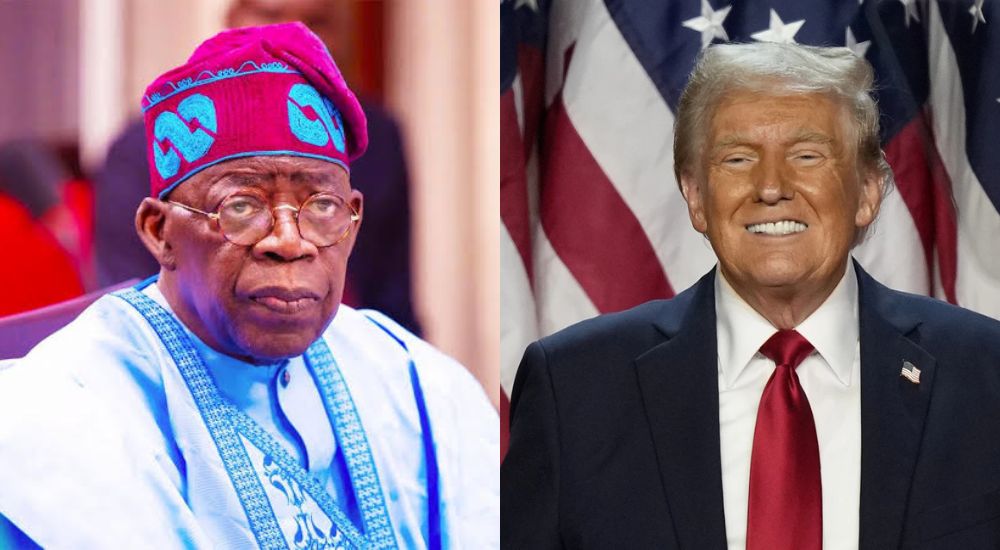
US President Donald Trump said Saturday that he has directed the Pentagon to prepare for “possible action” in Nigeria, escalating rhetoric after accusing the West African nation of failing to stop violence against Christians, charges Abuja has repeatedly denied. In a lengthy social media post condemning what he called the “mass slaughter” of Christians, Trump warned that the United States would “immediately stop all aid and assistance to Nigeria” unless the government moves quickly to protect vulnerable communities.
Trump’s post went further, saying the US “may very well go into that now disgraced country, ‘guns-a-blazing,’ to completely wipe out the Islamic Terrorists who are committing these horrible atrocities.” He added, “I am hereby instructing our Department of War to prepare for possible action,” and warned that any strike would be “fast, vicious, and sweet, just like the terrorist thugs attack our CHERISHED Christians! WARNING: THE NIGERIAN GOVERNMENT BETTER MOVE FAST!”
The president’s message was echoed on social media by Secretary of Defense Pete Hegseth, who posted a screenshot of Trump’s remarks and declared: “The killing of innocent Christians in Nigeria and anywhere must end immediately. The Department of War is preparing for action. Either the Nigerian Government protects Christians, or we will kill the Islamic Terrorists who are committing these horrible atrocities.”
Nigeria, with a population exceeding 230 million, has endured a complex and long-running pattern of violence. Attacks affecting civilians have multiple drivers: violent Islamist extremist groups operate in parts of the north, while other deadly incidents stem from communal disputes for example clashes between farmers and herders over land and water as well as local ethnic and criminal violence. Though some groups in Nigeria target Christians, numerous reports indicate that Muslims are also frequent victims, particularly in the predominantly Muslim northern regions.
Trump’s announcement follows his recent designation of Nigeria as a “Country of Particular Concern” under the International Religious Freedom Act, a move signalling that his administration believes Nigeria has engaged in or tolerated “systematic, ongoing, (and) egregious violations of religious freedom.” That designation comes with diplomatic weight and signals potential consequences for bilateral aid and cooperation.
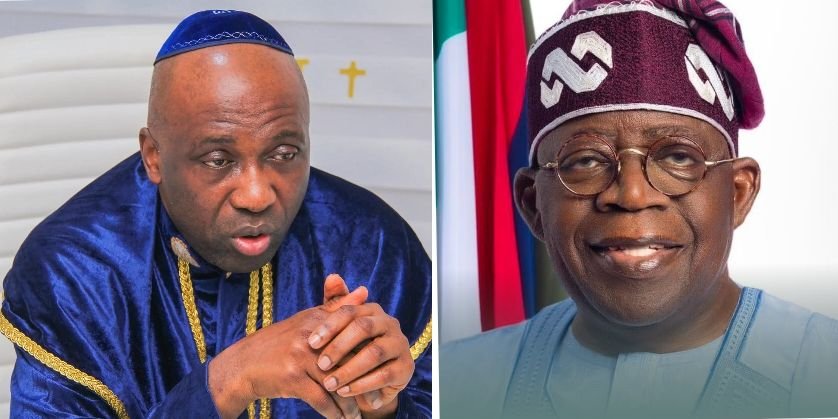
Nigerian President Bola Tinubu pushed back after the designation, saying the characterization “does not reflect our national reality,” and pointing to the government’s “consistent and sincere efforts” to protect freedom of religion and belief. Tinubu added that Nigeria is “working with the United States government and the international community to deepen understanding and cooperation on protection of communities of all faiths.”
Tinubu’s press secretary also dismissed claims that Christians alone are being targeted, calling social media assertions that “thousands of Christians” were slaughtered an overstatement and noting that “Christians, Muslims, churches and mosques are attacked randomly.” Voices within Nigeria called for a different US response: Bayo Onanuga argued that what Nigeria needs from America is military support to fight violent extremists in some states, rather than the stigma of being labeled a nation of particular concern.
The sharp tone of the White House posts and the president’s threat to halt aid come as senior US officials and Nigerian authorities exchange competing narratives on both the scale and the nature of the violence. Spokespeople for the White House and for President Tinubu’s office had not immediately replied to requests for additional comment.
As tensions rise, the potential consequences are significant. A US decision to cut aid would affect development and security programs long run in Nigeria, while any talk of unilateral military action raises delicate legal, diplomatic and operational questions. The president’s public posture promising swift and forceful action if Nigeria does not “move fast” marks a dramatic escalation in rhetoric that could reshape relations between the two countries and provoke strong reactions within Nigeria and across the region.