

Federal Workers Recalled as Nation Recovers from Longest Shut down in History
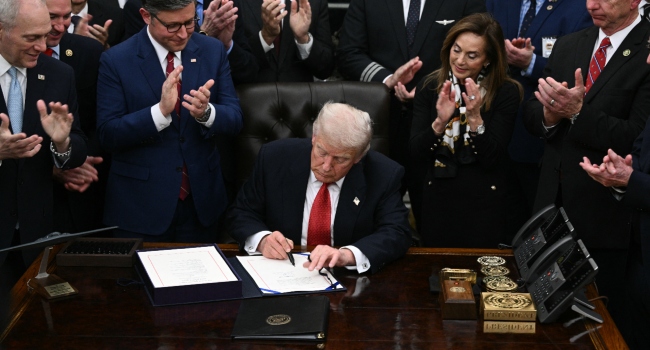
President Donald Trump has officially signed a bill ending the record-breaking 43-day U.S. government shutdown, bringing to a close one of the most paralyzing political standoffs in modern American history.
The legislation, passed after weeks of tense negotiations between Republicans and Democrats, reopens key federal departments and restores the salaries and jobs of hundreds of thousands of furloughed workers. The bill also reinstates federal employees who were dismissed during the shutdown, marking a significant reversal for the Trump administration.
“Today we are sending a clear message that we will never give in to extortion,” President Trump declared as he signed the measure in the Oval Office, surrounded by a visibly relieved group of Republican lawmakers, including House Speaker Mike Johnson.
Johnson, who spearheaded the Republican push in the House of Representatives, praised the deal but also pointed fingers at Democrats, accusing them of “causing needless pain” to American families for political gain.
“They knew this would hurt everyday citizens, yet they pushed ahead,” he said. “It was wrong, it was cruel, and it was entirely avoidable.”
The shutdown spanning over six weeks left Washington gridlocked and the federal workforce in turmoil. Roughly 670,000 civil servants were forced to stay home without pay, while another 600,000 essential employees, including air traffic controllers and security officers, continued working without compensation.
The consequences were far-reaching: airports faced significant delays, government services were halted, and national morale dipped amid mounting public frustration. The new bill funds critical areas such as military construction, veterans’ affairs, the Department of Agriculture, and congressional operations through next fall, while other agencies are funded until the end of January.
As operations resume, air travel and federal services are expected to gradually return to normal. Meanwhile, the Congressional Budget Office estimates that the shutdown inflicted an economic loss of approximately $14 billion a stark contrast to President Trump’s unfounded claim that Democrats had cost the nation $1.5 trillion.
Although polls showed Democrats enjoying higher public support during the standoff, the outcome of the shutdown has exposed deep internal fractures within the party.
For much of the shutdown, Democrats had stood firm on their demand for the extension of pandemic-era tax credits that had made health insurance more affordable for millions. But a group of eight moderate senators eventually broke ranks, negotiating a compromise with Republicans that offered only a symbolic vote on healthcare subsidies in the Senate without any binding action in the House.
This compromise has left many Democratic leaders facing backlash from their base. Senate Majority Leader Chuck Schumer is now under fire for what progressives describe as “strategic weakness,” while House Minority Leader Hakeem Jeffries has attempted to frame the outcome as a moral victory.
“Over the last several weeks, we have successfully elevated the issue of the Republican health care crisis,” Jeffries told MSNBC. “We’re not backing away from it.”
Still, the sense of defeat lingers. Prominent Democratic governors, including Gavin Newsom of California and JB Pritzker of Illinois, have openly criticized the agreement, describing it as “pathetic” and an “empty promise.” Former Transportation Secretary Pete Buttigieg joined in, calling it “a bad deal for working Americans.”
The Republican-led House, with its razor-thin majority, faces new challenges as it attempts to rebuild public confidence following weeks of political infighting. The shutdown exposed deep divisions not only between parties but also within them, as moderates and hardliners clashed over the best path forward.
President Trump, meanwhile, has used the occasion to rally his base, urging voters to “remember the chaos” when they head to the polls during the 2026 midterm elections. His administration has promised swift action to stabilize the economy, restore disrupted services, and rebuild trust in government institutions.
Political analysts predict that the fallout from this historic shutdown will shape the 2026 and 2028 election cycles, testing both parties’ ability to balance ideology with governance.
For millions of Americans, however, the message is simple: the government is finally open again, and after six long weeks, life can begin to return to normal.