In a major diplomatic development, the Chinese government has publicly expressed its support for President Bola Ahmed Tinubu’s administration, warning the United States to refrain from interfering in Nigeria’s internal affairs.
China’s reaction came in response to US President Donald Trump’s recent threat of military action against Nigeria over alleged persecution of Christians a claim that has drawn sharp criticism from global observers and African leaders alike.
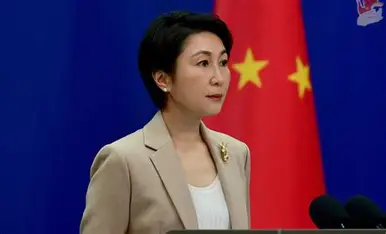
At a press conference in Beijing on Tuesday, Mao Ning, spokesperson for China’s Foreign Ministry, said Beijing “firmly opposes any country using religion and human rights as an excuse to interfere in other countries’ internal affairs.” She further emphasized that coercion, sanctions, or threats of military action only serve to destabilize developing nations rather than promote peace.
“As Nigeria’s comprehensive strategic partner, China firmly supports the Nigerian government in leading its people on a development path suited to its national conditions,” Ning declared.
“China firmly opposes any country using religion and human rights as an excuse to interfere in other countries’ internal affairs, and threatening other countries with sanctions and force.”
Her statement, which has since been widely circulated by Nigerian media, including a repost from Bayo Onanuga, the spokesperson for President Tinubu, underscores Beijing’s growing influence in African geopolitics and its willingness to challenge Washington’s dominance in the region.
China and Nigeria have enjoyed more than five decades of diplomatic relations, with ties deepening significantly over the last two decades. The relationship, now described as a “comprehensive strategic partnership,” has seen extensive collaboration in infrastructure, trade, and technology.
China has invested billions of dollars in Nigeria through its Belt and Road Initiative (BRI), funding major projects such as the Abuja–Kaduna railway, Lagos–Ibadan railway, airport terminals, and power plants. Chinese companies also play a critical role in Nigeria’s telecommunications and energy sectors, providing employment and technological transfer.
Political analysts note that Beijing’s latest show of solidarity is not just about diplomacy it reflects China’s broader strategy to position itself as Africa’s most reliable ally amid growing tension between the West and emerging economies.
By standing with Nigeria at a time when the country faces external pressure from the US, China is reaffirming its commitment to non-interference and mutual respect, two pillars of its foreign policy.
For President Tinubu, China’s statement provides a much-needed diplomatic cushion amid rising tension with Washington. Trump’s threat which included halting US aid and potential military intervention — came after he accused the Nigerian government of failing to protect Christians.
The Tinubu administration swiftly rejected the allegations, insisting that religious freedom remains a constitutional right in Nigeria. In response, Onanuga reaffirmed that the Nigerian government “does not discriminate on religious grounds” and is committed to ensuring peace among all faiths.
China’s backing gives Tinubu’s government a valuable international ally at a time when Western relations appear strained. However, experts caution that Nigeria must balance its relationships carefully, ensuring that deeper ties with Beijing do not alienate traditional Western partners such as the United States and the European Union.
Dr. Chike Nwosu, a Lagos-based international relations analyst, observed:
“China’s intervention is a strategic message to Washington that Africa, particularly Nigeria, now has multiple global partners. However, Nigeria must tread cautiously to avoid becoming a battleground for influence between two superpowers.”
Beyond politics, the China–Nigeria relationship is heavily rooted in economics. China remains one of Nigeria’s largest trading partners, with bilateral trade surpassing $20 billion annually. Nigeria imports machinery, electronics, and manufactured goods from China, while exporting crude oil and agricultural products.
Chinese firms are also expanding into Nigeria’s digital economy, construction, and renewable energy sectors, signaling Beijing’s long-term commitment to the West African nation.
With China’s open support in the face of US threats, Nigeria may find stronger leverage in international negotiations both diplomatically and economically. The statement also positions China as a defender of sovereignty for developing nations facing Western criticism.
In the coming months, observers will be watching how Nigeria navigates this delicate geopolitical landscape, balancing partnerships that serve its national interests without igniting rivalry among global powers.