
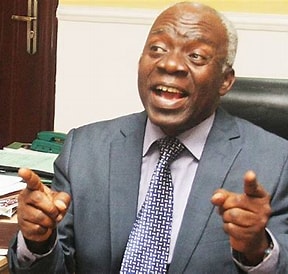
Human rights lawyer and Senior Advocate of Nigeria, Femi Falana, has outlined critical steps Nigeria must take to safeguard its democracy and promote stability across West Africa, following the resurgence of coups in the region.
Speaking during an interview on Politics Today on Channels Television, monitored by realtokng, Falana stressed that Nigeria cannot ignore the underlying drivers of domestic and regional instability. He argued that political stability will only be achieved when the structural challenges affecting governance and public trust are confronted head-on.
Falana emphasized that economic hardship, widening poverty, illiteracy, and rampant insecurity all contribute to social unrest conditions that can spark frustration and undermine democratic institutions.
“If we want to have political stability in Nigeria, you must address the crisis of the economy, address poverty, tackle illiteracy, and curb insecurity of lives and property,” Falana said.
A key part of stabilizing Nigeria, he continued, is ensuring civic freedoms. Falana condemned what he described as an alarming trend of shrinking civic space, including the criminalization of dissent.
“You cannot be charging people with all manner of offences for expressing their views about the affairs of their country,” he warned, insisting that freedom of expression must be protected, not suppressed.
Falana also called on the Independent National Electoral Commission (INEC) to broaden democratic participation by ensuring transparent, credible, and inclusive elections. He argued that many Nigerians feel alienated by current political practices, and that democracy cannot thrive where leaders clamp down on the opposition.
According to him, some African leaders misuse state power to weaken political rivals, shrink pluralism, and secure undue electoral advantage behaviour that undermines democracy and fuels instability.
The senior lawyer insisted that functional democracy requires a competitive and viable opposition, cautioning that ruling parties across Africa often “render opposition groups impotent” through restrictive tactics. Such actions, he said, only worsen public disillusionment and make democratic systems vulnerable to collapse or coups.
Falana maintained that Nigeria must serve as a model for democratic governance in West Africa by strengthening institutions, safeguarding freedoms, and addressing the economic challenges that fuel public frustration.