
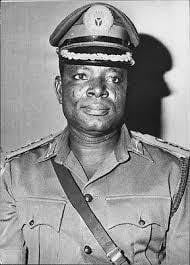
Nigeria has lost one of its most influential statesmen, Major General Abdullahi Mohammed (retd.), who served as Chief of Staff to former Presidents Olusegun Obasanjo and Umaru Musa Yar’Adua. The distinguished retired officer and administrator reportedly passed away around 1 a.m. on Wednesday in Abuja, at the age of 86.
Born in 1939 in Ilorin, Kwara State, the late General Mohammed was a respected military officer and public servant whose career spanned over five decades of national service. His death was confirmed by family members in Ilorin, who described it as “a huge loss to the Ilorin Emirate, the nation, and the Nigerian military community.”
Mohammed began his military journey at the prestigious Royal Military Academy, Sandhurst, United Kingdom, and was commissioned into the Nigerian Army in 1958. Rising through the ranks, he became Director of Military Intelligence, playing a significant role in the 1975 coup that ousted General Yakubu Gowon and brought General Murtala Mohammed to power. Following the coup, he was appointed Governor of the defunct Benue-Plateau State, serving from July 1975 to March 1976.
Under General Olusegun Obasanjo’s military regime, Mohammed became the Director-General of the National Security Organisation (NSO) — the forerunner of today’s Department of State Services (DSS) where he served until 1979. After retiring from the military, he went into private business and became the Managing Director of Atoto Press Limited, a renowned printing firm based in Ilorin.
His remarkable leadership earned him another call to national service in 1998, when he was appointed National Security Adviser (NSA) by then Head of State, General Abdulsalami Abubakar, playing a crucial role in the transition to democracy in 1999. With the return of civilian rule, Mohammed was appointed Chief of Staff to President Obasanjo, a position he continued to hold under President Yar’Adua until his resignation in June 2008.
Throughout his public life, General Mohammed was regarded as a disciplined soldier, astute administrator, and silent power broker, who worked behind the scenes to influence key decisions in Nigeria’s political and security architecture.
The Ilorin Emirate Descendants Progressive Union (IEDPU) has expressed deep sorrow over the passing of the retired General, describing it as a monumental loss to the Ilorin Emirate and the nation. In a condolence statement signed by its National Publicity Secretary, Nurudeen Ibrahim, on behalf of the National President, Alhaji Abdulmumini Abdullahi, the union praised Mohammed’s extraordinary contributions to national development and community service.
“The death of General Mohammed is even more painful at a time when Nigeria needs the wisdom and guidance of tested patriots to navigate its challenges,” the statement read.
The IEDPU highlighted Mohammed’s groundbreaking achievements, noting that he was the first son of Ilorin to serve as a state governor and the first to attain the rank of a two-star General in the Nigerian Army. The union also lauded his consistent support for the Ilorin community, recalling how he sponsored the printing of the IEDPU’s annual calendar for several years at no cost.
“General Mohammed played critical roles in Nigeria’s history. He was a patriot who fought to keep the country united and later served as National Security Adviser and the first and longest-serving Chief of Staff to the President,” the statement added.
The IEDPU extended condolences to President Bola Tinubu, former Presidents Olusegun Obasanjo and Abdulsalami Abubakar, Kwara State Governor AbdulRahman AbdulRazaq, and the Emir of Ilorin, Alhaji (Dr.) Ibrahim Sulu-Gambari, over the passing of the eminent Ilorin-born leader.
Prayers were also offered for the repose of his soul, with the IEDPU and family members invoking Almighty Allah’s mercy to forgive his shortcomings and grant him Aljanat Firdaus, while asking for strength and comfort for his loved ones to bear the loss.
Major General Abdullahi Mohammed will be remembered as one of Nigeria’s most enduring symbols of patriotism, service, and discipline, whose influence quietly shaped the nation’s political and security history.