
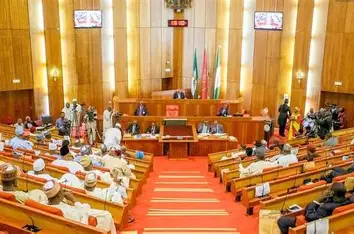
The Senate has initiated a far-reaching probe into the management and utilisation of the ₦15 billion Safe Schools Fund released in 2023, expressing strong concerns over questionable spending patterns, unverified expenditures, and what lawmakers describe as “disturbing financial inconsistencies.”
At the centre of the controversy is the Nigerian Police Force, which received the largest allocation ₦6.225 billion raising questions about how the funds were used under the multi-agency Safe Schools Initiative (SSI) designed to protect schools from terrorism, banditry, and mass abductions.
Committee Questions Spending, Demands Full Transparency
Chairman of the Senate Ad-hoc Committee on Safe Schools Implementation, Senator Orji Uzor Kalu (APC, Abia North), disclosed the Senate’s concerns after grilling the National Coordinator, Hajia Halima Iliya, who oversees Financing Safe Schools in Nigeria.
Kalu ordered an immediate reconciliation and resubmission of all financial records, insisting that the committee would not advance its inquiry without: A complete expenditure breakdown, Names and details of contractors, CBN Trust Fund documentation, Clear accounting for every agency’s allocation
He stressed that the Senate must see verifiable, transparent, and accurate records before drawing any conclusions.
Funding Origins and Allocations Revealed
Iliya traced the Safe Schools Initiative to its founding in 2014, following the abduction of 276 Chibok schoolgirls. She detailed contributions made to the CBN-domiciled Trust Fund:
- Federal Government: $10m (₦1.5bn)
- Nigerian private sector: $10m (₦2bn)
- African Development Bank: $1m (₦200m)
- German Government: €2m (₦1bn)
- Norwegian Government: $4m (managed by UNICEF)
- UN Multi-Donor Trust Fund: (UNICEF, UNDP, UNOPS)
- USAID & Qatar Foundation: $4m combined
She confirmed the 2023 national disbursement of ₦15bn as follows:
- Nigerian Police Force: ₦6.225bn
- NSCDC: ₦3.362bn
- Defence Headquarters: ₦2.250bn
- Federal Ministry of Education: ₦519m
- DSS: Not disclosed publicly during the session
Iliya also noted that the Safe Schools Financing Office received no budgetary allocation for 2024 or 2025, attributing this to late budget submissions.
Tension as Senators Challenge Consultancy & Operational Costs
During the hearing, tensions escalated when Senator Oluranti Idiat (APC, Lagos Central) sharply criticised the programme’s spending structure.
She questioned why nearly half of a referenced ₦4.44 billion appeared to have gone to consultancy and operational costs almost equal to direct project spending.
“You have spent nearly half of ₦4.44 billion on consultancy and operational expenses. That is nearly the same as the project cost. Don’t you think this is why there is no new budget?” she asked.
Iliya replied that the figures were from 2014, not 2023, prompting Idiat to retort:
“You’re not doing us a favour. Please withdraw that statement.”
Senator Musa Maidoki (APC, Kebbi South) argued that Safe Schools funding should be community-centric and performance-based, not disbursed independently to security agencies.
Senator Kenneth Eze (APC, Ebonyi Central) added that many of the financial submissions lacked clarity and authenticity, warning that consultancy expenditures raise “serious red flags.”
Probe Continues as Senate Demands Accountability
The Senate Committee vowed to intensify its investigation, declaring that no further steps will be taken until all agencies provide transparent, reconcilable, and complete financial records of how the ₦15 billion was spent.
The probe is expected to deepen in the coming weeks as lawmakers push to determine whether the Safe Schools funds were properly utilised or mismanaged a conclusion that could have widespread implications across Nigeria’s security and education sectors.