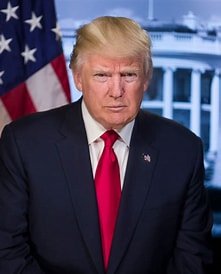
U.S. President Donald Trump has warned that the United States could carry out a second military strike on Venezuela if senior figures in the government refuse to cooperate with Washington’s plans to “fix” the crisis-ridden South American nation following the dramatic capture of President Nicolas Maduro.
Speaking to reporters aboard Air Force One on Sunday, Trump suggested that further U.S. military interventions in Latin America were not off the table. He also hinted that Colombia and Mexico could face similar action if they fail to curb the flow of illicit drugs into the United States.
“Operation Colombia sounds good to me,” Trump said, while adding that Cuba, a key ally of Venezuela, “looks like it’s ready to fall” without the need for direct U.S. military involvement.
Maduro is currently being held in a New York detention facility and is expected to appear in court on Monday on drug-related charges. His arrest by U.S. forces has plunged Venezuela into deep political uncertainty and sparked international controversy, given the country’s strategic importance as an oil producer.
Trump said his administration intends to work with remaining members of Maduro’s government to crack down on drug trafficking and restructure Venezuela’s oil sector, rather than immediately push for elections to install a new government.
However, top officials in Caracas have rejected Washington’s actions, branding the detention of Maduro and his wife, Cilia Flores, as an outright kidnapping.
“There is only one president, and his name is Nicolas Maduro Moros,” Interior Minister Diosdado Cabello declared in an audio message released by the ruling PSUV socialist party, warning citizens not to fall for what he called “enemy provocations.”
Images of the 63-year-old Maduro, blindfolded and handcuffed, shocked Venezuelans and underscored the scale of the operation widely described as the most controversial U.S. intervention in Latin America since the invasion of Panama 37 years ago.
Venezuela’s Defence Minister, General Vladimir Padrino, said the U.S. attack killed soldiers, civilians, and a “large part” of Maduro’s security detail “in cold blood.” He announced that the armed forces had been fully mobilised to defend national sovereignty.
The Cuban government also claimed that 32 Cuban citizens were killed during the raid.
Meanwhile, Vice President Delcy Rodriguez, who also serves as oil minister, has assumed the role of interim leader with the backing of Venezuela’s top court, insisting that Maduro remains the legitimate president.
Although Rodriguez is seen as the most pragmatic member of Maduro’s inner circle, she has publicly disputed Trump’s claim that she is willing to work with Washington. Trump, however, warned that she could face consequences “bigger than Maduro’s” if she fails to cooperate, according to an interview he granted The Atlantic.
The Trump administration has framed Maduro’s arrest as a law-enforcement operation, citing U.S. criminal charges filed in 2020, including narco-terrorism conspiracy, which Maduro has consistently denied.
Yet Trump openly acknowledged that Venezuela’s vast oil reserves and migration pressures played a role in the decision.
“U.S. oil companies need total access to the oil,” Trump said, also alleging that Maduro deliberately sent millions of criminals and drug addicts into the United States as migrants.
Venezuelan officials have long accused Trump of seeking to seize the country’s natural resources, particularly oil. Cabello said recent comments by Trump confirmed those fears.
“We are outraged because everything has now been revealed they only want our oil,” he said.
U.S. Secretary of State Marco Rubio said Venezuela’s next leadership must prevent the oil industry from falling into the hands of U.S. adversaries and take decisive steps against drug trafficking. He added that an ongoing U.S. blockade on oil tankers would remain until conditions aligned with American and Venezuelan interests.
Inside Venezuela, reactions were mixed. Some Maduro supporters staged government-backed protests in Caracas, warning against foreign domination. Opposition figures, however, were cautious, with Trump downplaying the role of opposition leader and Nobel laureate Maria Corina Machado, saying she lacked sufficient support.
U.S. Senate Democratic leader Chuck Schumer criticised the White House for failing to clarify how long American forces might remain in Venezuela, warning of the risk of an “endless war.”
Globally, calls have mounted for the U.S. to respect international law, while the United Nations Security Council is set to meet to discuss the attack. Russia and China, both key allies of Venezuela, have condemned Washington’s actions.
Despite the tense atmosphere, daily life in parts of Venezuela continued cautiously, with shops reopening and residents stocking up on essentials amid widespread anxiety.