


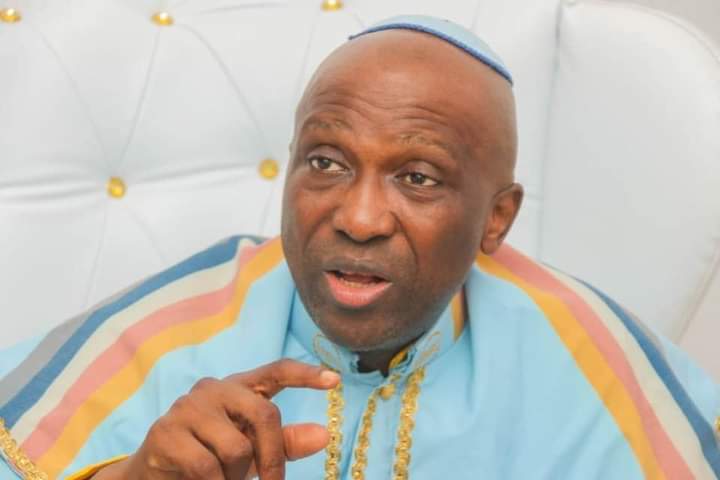
The Leader of INRI Evangelical Spiritual Church, Primate Elijah Babatunde Ayodele, has issued a stern warning to the Nigerian government over the nation’s economic direction, cautioning that several multinational companies may soon exit the country if urgent corrective measures are not taken.
In a recent prophetic declaration, Primate Ayodele expressed deep concern about the increasingly hostile business environment in Nigeria, noting that unfavourable government policies, worsening insecurity and mounting operational challenges could push foreign investors to relocate their businesses elsewhere. According to him, failure to act decisively could further weaken the economy and worsen the country’s unemployment situation.
“The government of Nigeria must be extremely careful,” the cleric warned. “I see some multinational companies leaving the country due to unfriendly policies, insecurity, and operational frustration. If nothing is done, it will affect our economy even more.”
Primate Ayodele stressed that Nigeria risks losing its appeal as a preferred investment destination if authorities do not urgently improve the conditions under which businesses operate. He urged the government to prioritise economic reforms that would encourage foreign direct investment, protect existing investors and restore confidence in the market.
The outspoken prophet highlighted several factors contributing to the growing frustration among multinational firms, including rising operational costs, inconsistent and unpredictable regulations, poor infrastructure, and instability in the foreign exchange market. He noted that these challenges make it increasingly difficult for companies to plan effectively or operate profitably in the country.
According to Primate Ayodele, many of these companies may not publicly announce their exit plans, but would instead adopt a gradual withdrawal strategy. “These companies won’t announce it loudly,” he said. “It will start with closing branches quietly, downsizing staff, and then relocating their headquarters. This is a serious wake-up call for the government to act.”
He warned that such exits would have far-reaching consequences, including job losses, reduced tax revenues, and further pressure on the already fragile economy. The cleric cautioned that once companies begin to leave, reversing the trend could prove extremely difficult.
Primate Ayodele also linked the potential exodus of multinational firms to Nigeria’s broader security challenges, noting that persistent insecurity discourages long-term investment. He urged the government to strengthen security across the country, particularly in key commercial and industrial hubs, to reassure both local and foreign investors.
His warning comes amid growing concerns over Nigeria’s economic outlook, as several global companies in recent years have either scaled down operations or exited the market entirely, citing harsh economic conditions and regulatory bottlenecks. These developments have raised questions about Nigeria’s competitiveness compared to other African and emerging markets.
Describing his message as both prophetic and strategic, Primate Ayodele said the situation demands immediate attention from national leaders. He emphasised that creating an enabling environment for businesses is critical to economic recovery and sustainable growth.
“This is not just a prophecy; it is a warning that requires action,” he stated. “If the government does not act quickly, the consequences will be felt across all sectors of the economy.”
Primate Ayodele concluded by calling on policymakers to review fiscal and monetary policies, address infrastructural deficits, stabilise the foreign exchange market and engage constructively with investors to prevent further deterioration of the business climate.
His message serves as a cautionary signal at a critical moment, urging the Nigerian government to take decisive steps to retain multinational companies and protect the nation’s economic future.