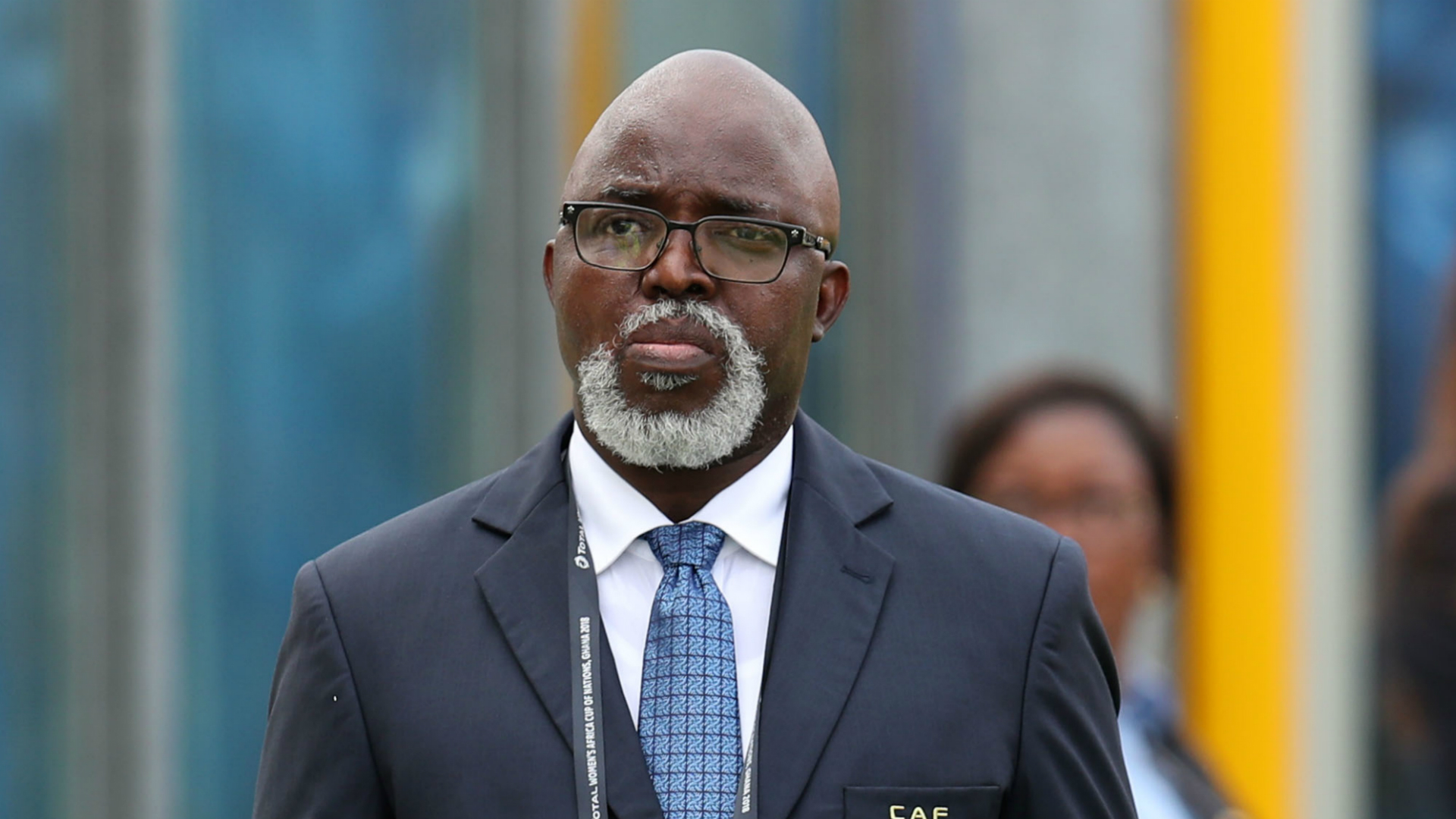
Former President of the Nigeria Football Federation (NFF), Amaju Melvin Pinnick, is facing public criticism after repeatedly asserting that the Super Eagles would have been on course to qualify for the 2026 FIFA World Cup if he were still in charge of Nigerian football administration.
Pinnick, who oversaw Nigerian football during the Super Eagles’ failure to qualify for the 2022 FIFA World Cup in Qatar, recently claimed he would have approached the current qualification campaign differently. His remarks come at a time when Africa now has 10 qualification slots for the expanded 2026 World Cup, a development many believe should improve Nigeria’s chances.
The former NFF boss suggested that the present leadership under Ibrahim Gusau has not maximized the opportunity presented by the increased slots. According to him, lessons learned during his tenure would have influenced better decision-making both on and off the pitch if he were still leading the federation.
Speaking in an interview aired on Brila FM, Pinnick stood by his comments without hesitation.
“I said so and I don’t have any regrets saying it. If I was the president, I would have qualified for the 2026 World Cup because I would have learned on and off the field of play everything I needed to do,” Pinnick said.
“Ibrahim by God’s grace if he gets re-elected, there’s no way that he will not qualify Nigeria. He will now know that from the beginning, every point counts, and that’s what I would have done because I knew.”
Pinnick also hinted that the current qualification struggles could still be reversed if Gusau, whose tenure ends in September, secures another term as NFF president. He emphasized that experience and early strategic planning are key factors in navigating World Cup qualification campaigns.
However, many football fans and analysts have questioned Pinnick’s confidence, pointing out that Nigeria missed the 2022 World Cup under his leadership. Critics argue that his recent statements appear to deflect attention from past shortcomings while placing undue pressure on the current administration.
The debate has reignited discussions about leadership, accountability, and long-term planning within Nigerian football, especially as the Super Eagles fight to remain competitive in the race toward the 2026 World Cup.