
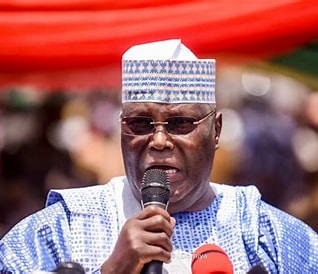
Former Vice President Atiku Abubakar has called on leaders across Northern Nigeria to recommit themselves to unity, visionary leadership, and purposeful action in order to confront the region’s deepening security and developmental crises. Atiku made this appeal while speaking at the 25th anniversary dinner of the Arewa Consultative Forum (ACF) in Kaduna, where he reflected on the organisation’s legacy and the urgent need for a new direction.
Atiku praised the ACF for its resilience over the past quarter of a century, noting that the organisation had survived political tensions, upheavals and shifting national dynamics because of its relevance to Northern identity and development. He described the anniversary as not merely a celebration, but a moment for sober reflection on the challenges that lie ahead.
The former Vice President paid glowing tribute to past leaders of the ACF men who, despite enormous political and social storms, built and sustained the platform over the years. He prayed for the repose of their souls and urged current leaders to honour their legacy by defending unity and working for the advancement of the region.
Recalling events from his early political journey, Atiku noted that when he became Vice President in 1999, the North was severely fragmented along multiple political lines. One of his earliest assignments, he said, was to bring the various blocs together. This led to extensive consultations, culminating in the formation of a high-powered reconciliation committee chaired by the Emir of Ilorin, Ibrahim Sulu-Gambari. The outcome of this process, he explained, was the eventual establishment of the Arewa Consultative Forum.
Atiku revealed that the unification effort was difficult but ultimately successful, thanks to the leadership of figures such as General Yakubu Gowon and the late M.D. Yusufu. According to him, the priority at the time was singular unity, without which development would remain elusive.
He further emphasized that the ACF was founded with a clear mandate: to champion the socio-economic development of Northern Nigeria, advancing the legacy of Sir Ahmadu Bello. The late Sardauna’s vision for the region anchored on education, agriculture, and industrial expansion—remains just as crucial today, Atiku said.
Reflecting on his tenure, Atiku explained that by 1999, these sectors had deteriorated drastically, prompting him to establish the Northern Education Project led by Prof. Adamu Baiki. The project carried out a comprehensive diagnosis of the region’s collapsing education system, with findings that he described as alarming. This led to significant reforms including improved teacher evaluation manuals, capacity-building programmes, and initiatives to restore dignity to the teaching profession through awards and motivational schemes.
According to Atiku, the results were remarkable: enrolment and transition rates doubled across several northern states during their first term in office, with the official records still available at Arewa House.
On agriculture, he noted that the Northern Development Project (NDP) was launched to reposition the sector by reviewing key policies, rebuilding agricultural value chains and addressing climate-related challenges that were already affecting yields and food security.
Atiku stressed that recounting these efforts was not an attempt to look backward with regret, but a deliberate effort to awaken the North from what he called “collective complacency.” He warned that the region is currently facing unprecedented threats from insecurity to poverty, disunity, and political manipulation fueled by adversaries who exploit fear, technology and misinformation.
He observed that diversity, once a source of cultural strength, is now being weaponised. To overcome this, he encouraged northern leaders to learn from nations such as India and China, which have transformed their economies despite managing far greater ethnic and cultural diversity.
Atiku warned bluntly that the 21st century has no space for complacency, weak governance or leadership without vision. He urged northern leaders to reflect deeply on how they wish to be remembered: as individuals who sacrificed for future generations or those who served only their personal interests.
He further appealed for a renewed spirit of unity, stating that if there was ever a time for the North to rally together with purpose and resolve, that moment is now. He prayed for divine guidance as the region confronts its many challenges and expressed gratitude to the ACF for its unwavering role in shaping northern consciousness and advocating for regional development.