

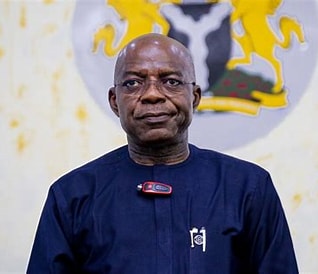
Abia State Governor, Dr. Alex Otti, has reaffirmed his administration’s determination to modernize and expand correctional facilities across the state, stating that the construction of new centres is a deliberate measure to address the persistent congestion that has strained existing institutions.
The Governor made this known on Friday, November 21, during a courtesy visit by the new Zonal Coordinator of the Nigerian Correctional Service, Owerri Zone E, and Assistant Controller General of Corrections, Dr. Ngozi Amanze, to the Government House.
Welcoming the delegation, Governor Otti explained that ensuring humane living conditions, improving rehabilitation programmes, and strengthening security infrastructure remain core targets of his administration. He noted that the three major correctional centres in the state located in Umuahia, Aba, and Arochukwu require comprehensive interventions to meet acceptable standards of safety and rehabilitation.
Governor Otti disclosed that the state government had already begun perimeter fencing around the facilities to prevent encroachment and unauthorized movement. This initiative followed earlier complaints from correctional authorities about porous boundaries that exposed facilities to security risks.
He expressed particular concern over the current inmate population, which stands at approximately 1,935 across the three centres. While stressing the need to decongest the facilities, he cautioned that such efforts must not compromise justice or public safety.
“Our target should be to bring the number down, not up,” Otti emphasized. “But we will not let people go when they should not be let go.”
He revealed that between 2023 and 2024, his administration undertook assessments to identify inmates eligible for state pardon. However, the process yielded no result due to the prevalence of inmates serving sentences for murder and other severe crimes. Despite this, he encouraged the correctional service to revisit the list and identify cases where the law permits a review.
The Governor assured the visiting delegation that medical services within the correctional centres would be strengthened. He directed the State Commissioner for Health to conduct an immediate needs assessment and deploy primary healthcare support where required.
Recognizing that some operational challenges extend beyond state borders, Governor Otti disclosed ongoing plans to collaborate with the Imo State Government to resolve shared logistics and security constraints affecting correctional facilities in both states.
In her remarks, Dr. Ngozi Amanze commended Governor Otti for what she described as unprecedented infrastructural support to correctional institutions in Abia State. She highlighted several key interventions, including: Construction of a fortified perimeter wall around the Aba Correctional Centre, Development of a new storey building with six cells in the same facility, Installation of solar-powered lighting systems in Umuahia and Arochukwu, Provision of solar-powered boreholes to improve water supply
According to her, these upgrades have significantly bolstered security, enhanced staff morale, and contributed to stability within the centres.
She noted that water scarcity had historically triggered unrest among inmates, but the governor’s intervention has greatly reduced tensions. Dr. Amanze further disclosed that the three Abia centres collectively house around 1,935 inmates, while neighbouring Imo State currently accommodates about 1,607 inmates.
The Zonal Coordinator appealed to the Governor for additional support in expanding educational and vocational training programmes for inmates. She observed that about 85% of inmates in Aba, Umuahia, and Arochukwu are young Abians whose education was disrupted due to involvement in crime.
Dr. Amanze emphasized that empowering these individuals with education and skills is essential to reducing recidivism and fostering their reintegration into society after serving their sentences.
Governor Otti expressed willingness to collaborate with the Correctional Service to enhance such programmes, noting that rehabilitation is central to building a safer and more productive society.