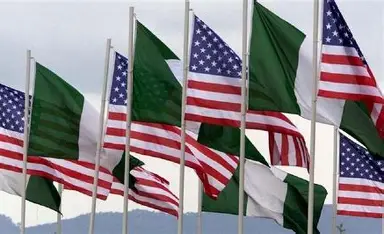
The United States government has issued a strong call to the Federal Government of Nigeria, demanding immediate action to bring to justice those responsible for the recent mass abductions of schoolchildren in Kebbi and Niger states. The US also emphasized the need for stronger protection of Christians across the country.
This follows renewed waves of attacks on schools in Northern Nigeria, where armed bandits kidnapped students, teachers, and staff, leaving families devastated and the nation on edge.
A shocking attack on Government Girls’ Comprehensive Senior Secondary School, Maga, in Kebbi State left the school’s vice-principal, Hassan Makuku, dead and 25 schoolgirls abducted. Days later, over 300 students and teachers were seized from St. Mary’s Catholic School in Papiri, Niger State. While some students escaped, hundreds many of them nursery and primary pupils remain with their captors in the forest, according to the Catholic Diocese of Kontagora.
The US Bureau of African Affairs, in a statement posted on X, condemned the attacks and demanded firm action from Nigeria. It stressed the urgency of arresting the perpetrators and ensuring Christians can live and practice their faith without fear.
“Those responsible must be swiftly captured and held accountable. The Nigerian government must do more to protect Christians and ensure Nigerians can live, learn, and worship freely,” the US statement read.
Amnesty International Nigeria also warned that the rising pattern of mass school kidnappings is worsening insecurity and further crippling education in the North.
Amid the crisis, the Nigerian Presidency announced a major breakthrough: the United States has agreed to strengthen security collaboration with Nigeria in unprecedented ways.
This agreement followed a series of high-level security meetings in Washington, DC, involving US officials and a Nigerian delegation led by National Security Adviser Nuhu Ribadu. The team included Attorney-General Lateef Fagbemi, Inspector-General of Police Kayode Egbetokun, Chief of Defence Staff Gen. Olufemi Oloyede, Chief of Defence Intelligence Emmanuel Undiandeye, and other senior officials.
According to a statement by Presidential aide Bayo Onanuga, both nations agreed to: Establish a Joint Working Group to coordinate counterterrorism operations, Share real-time intelligence to track and dismantle terrorist networks, Fast-track arms and defence equipment requested by Nigeria, Provide excess defence articles (military equipment no longer in active US use), Expand humanitarian support to communities affected by violence, Strengthen early-warning systems to detect and prevent attacks
The Nigerian delegation also used the meetings to correct what they called “misconceptions” about the security landscape in Nigeria, firmly rejecting allegations of genocide. They stressed that attacks affect people across multiple ethnic and religious backgrounds, and should not be misrepresented in ways that could fuel division.
The Federal Government reaffirmed its commitment to civilian protection and assured Nigerians that decisive steps are underway in partnership with the US to enhance national security.
“Citizens should remain assured that firm, coordinated measures are being taken to secure the nation,” Onanuga stated.
As global pressure mounts and international partners offer support, expectations are rising for Nigeria to overhaul its security response and end the cycle of school abductions that continues to haunt families and destabilize communities.