



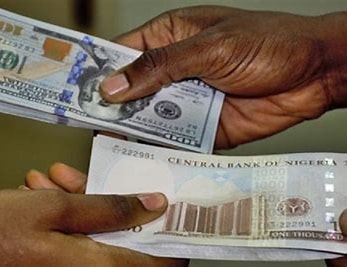
Official and Parallel Market Rates Remain Stable Amid Reduced Volatility and Regulatory Overhaul
The Nigerian foreign exchange market maintained a notable level of stability on Wednesday, December 10, 2025, as both the official and parallel market rates showed minimal fluctuations. This calm performance comes on the heels of the Central Bank of Nigeria’s (CBN) sweeping restructuring of the Bureau de Change (BDC) subsector, a move analysts say is already strengthening market discipline.
At the Nigerian Foreign Exchange Market (NFEM) the official trading window, the Naira exchanged at ₦1,452.16 per US Dollar, reflecting only a marginal dip from its opening figure of ₦1,451.30. The intraday movement, less than 0.1%, underscores a tightening rate band that has been consistent throughout the week.
Earlier on Monday, December 8, the CBN reported an official closing rate of ₦1,454.00, with recent sessions recording highs of ₦1,457.00 and lows of ₦1,450.25. Market analysts note that such narrow fluctuations signal improved liquidity conditions and a significant reduction in the volatility that defined previous market cycles.
In the parallel market, the Naira traded within the range of ₦1,460 to ₦1,478 per Dollar, depending on transaction volume and regional factors. The spread between the official and unofficial windows now below ₦30 has tightened substantially. This narrowing is being credited to the CBN’s tough stance against speculative trading and illicit arbitrage, particularly following its major regulatory intervention last month.
On Tuesday, reports confirmed that the CBN granted final approval to only 82 BDC operators under its new compliance-driven regime. The apex bank’s revised structure classifies operators into two tiers: Tier 1 BDCs: Minimum capital requirement of ₦2 billion, Tier 2 BDCs: Minimum capital requirement of ₦500 million
With over 4,000 previous licenses revoked or deemed non-compliant, the policy aims to sanitise the sector, eliminate “briefcase operators,” and ensure that only well-capitalized, professional entities participate in retail forex transactions.
Despite the Naira not recording substantial appreciation this month, market participants view the stability and lower volatility as a positive development. Importers, investors, and businesses planning for the 2026 fiscal year are finding increased predictability in the forex environment a key factor for operational planning.
Currency traders expect the Naira to remain within the ₦1,450 – ₦1,480 band throughout the week as the market continues to adjust to the restructured BDC landscape. However, they caution that external variables such as global oil prices and Nigeria’s foreign reserve levels will play critical roles in shaping the Naira’s trajectory going into the new year.